What does it take to be worth over $20 billion?
The market added $20 billion to Starbucks the day Brian Niccol was named CEO. Here is the model behind that bet, and the misstep that handicapped the new CEO before day one.
It's a big week for Starbucks this week; their new CEO assumes his new role. And expectations aren't just large, or venti. They're massive. Ginormous. HUUUGE.
I have been following Starbucks Corporation's performance for some time now. Not because I am an avid coffee drinker or because I love their cafes and their food. I've been intrigued at how a once tiny and now global brand maintains quality and grows loyalty whilst operating in 83 countries and from almost 40,000 stores (or cafes.)
The Complexity of the Green Machine (aka Starbucks)
There's an incredibly intricate dance that comes together with this company with a ton of moving parts, the most significant of which include:
- The role and influence of leaders and managers in Seattle HQ and around the globe in setting the culture and the tone
- The innovation into new products, store layouts, and other dimensions of the consumer experience
- Their discipline to execute and deliver on their plan(s)
- Managing a global supply chain that covers everything from bean to cup (I don't know if that is an established phrase but I like it) - it is estimated that Starbucks purchases around 600 million pounds of coffee each year - putting Starbucks at the top of the global list of coffee bean purchasers
- Managing an incredibly complex and complicated array of options with over 200,000 beverage options available to be ordered across three channels (in store, the app, and from drive through lines)
- Employment for hundreds of thousands of full-time, part-time, and seasonal workers; just consider the volume of work here - performance reviews for 400,000 people, tens of thousands of interviews that must be conducted to hire new workers when there is attrition, performance management interventions, and development opportunities for everyone
- Managing a free float of around $1.5 billion (i.e. funds that consumers have willingly loaded into their Starbucks apps for future purchases.)
I was astonished by their recent performance decline (market share + profit + share price) and I wasn't surprised by how the market was really punishing them for a failure to deliver.
The Conundrum of the influence of the 'Former' CEO
It was that poor performance that led the founder and former CEO of Starbucks Howard Schultz to share his thoughts (publicly) about where things had gone wrong. At the time the narrative was whether Schultz had overstepped - should the former CEO be talking openly about the performance of his successor Laxman Narasimhan (I didn't think he was wrong, and I said so at the time.)
The concept of a Founder and CEO handing over the reins to someone new and then stepping aside, only to re-emerge as an activist thorn in the side of the management team is not uncommon. We've seen that recently with Bob Iger of Disney (I wrote about that at the time too.) A founder (who is also a large owner) who is very passionate about the company should not have to "let go" and keep quiet.
The Emergence of the $20 billion man
Starbucks recently announced Brian Niccol (currently at Chipotle Mexican Grill) as their new CEO and Board Chairman. He started this week. Yes, the stock rallied, adding $20 billion in market cap. And while that must have hurt the recently ousted CEO Narasimhan, the market is sending a powerful message.
He's been called the LeBron James or the Tom Brady or the Messi of the restaurant industry. That's high praise. And it comes with massively high expectations.
I wanted to investigate and understand how one person could be worth $20 billion. Here is the answer (in the form of a model, which I build out in the video above):
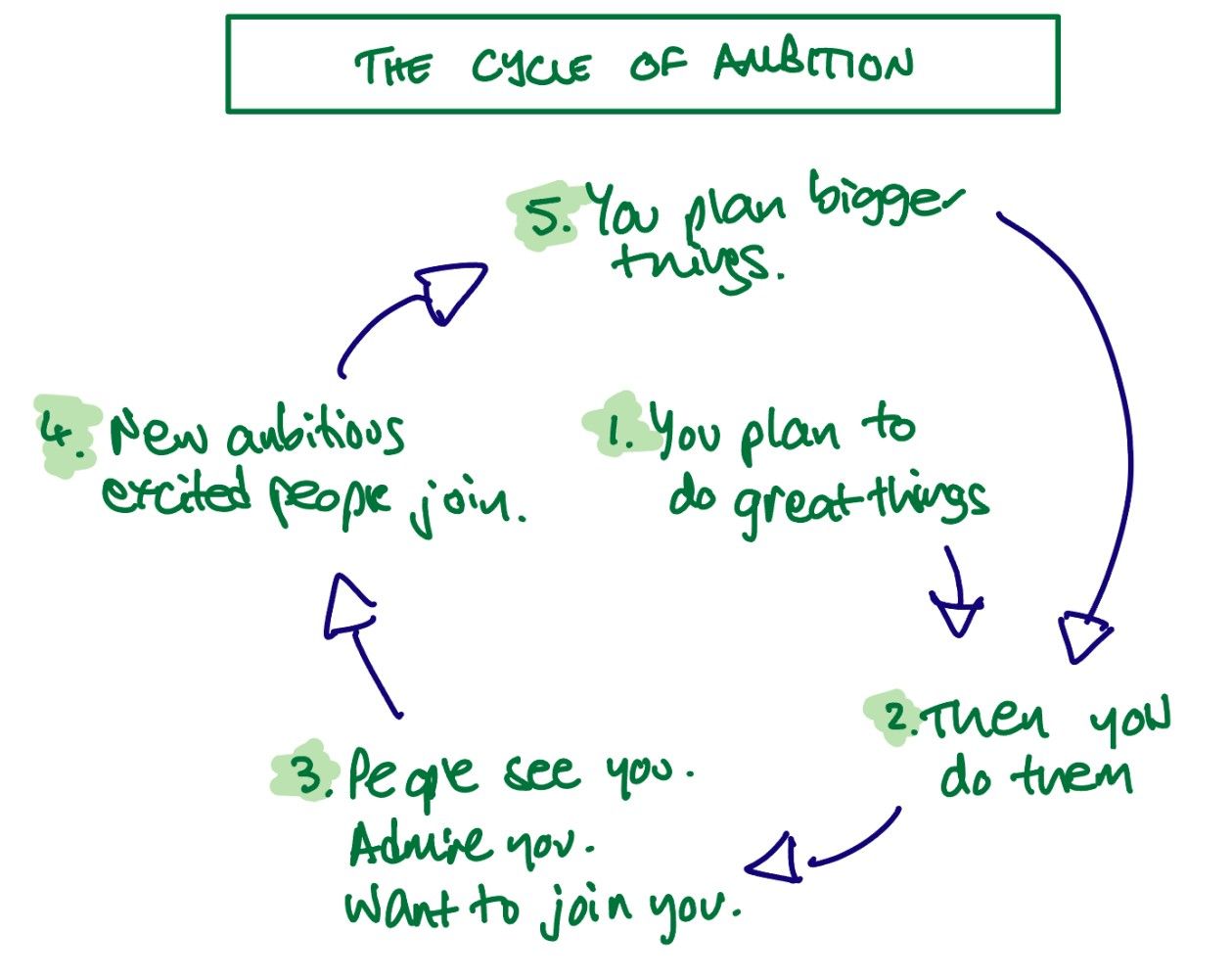
So what is he bringing to the party (or the coffee store?)
- HIGHLY RELEVANT experience - dealing with quality and performance issues, complex supply chain operations, activist investors, and a board and stakeholders.
- PROVEN TURNAROUND experience - resulting in an 800% increase in share price for Chipotle and an increase in same store sales when competitors are all down.
- BRAND understanding - he understands the power of brands and harnessing social media to amplify what he knows his consumers want. And what is Starbucks if not a brand?
- DEEP MARKET and CONSUMER knowledge - he understands what his consumers want (reliable, quality, affordable) and he meets their needs with an offering to match, keeping prices lower whilst others ramped them up during inflationary pressure. He knows you can't grow by increasing prices.
- Proven PEOPLE-LEADER - Walmart appointed Niccol to their board and called him a "dynamic leader with a passion for excellence"; he has been known to create a people-centric innovation culture in the places he has worked. This last point comes with a caveat (see below).
Creating headwinds + a misstep before he has even started
Unfortunately, the announcement also attracted attention (and created a bitter, bad taste for a lot of employees) for a lot of the wrong reasons.
The announcement of the new CEO came with the news that, in addition to his rather rich compensation offer, the board agreed to:
- Create an office for him in Newport Beach (where he lives), and
- Allow him to use a private jet to commute to/from Seattle - and elsewhere.
Consider this:
If Niccol is able to restore Starbucks to greatness and improve profitability, everyone should be happy - right?
As the CEO of a global brand, we expect the CEO to be everywhere (and not working out of his open-plan office in downtown Seattle every day.) So the travel really isn't an issue.
We know remote and hybrid work is here to stay.
When it comes to culture, what you say & what you do are both really important - especially if you're the leader.
But Starbucks really fumbled this one.
On Starbucks's website, they talk about a Culture of Connection where "we enjoy a flexible, hybrid workplace, with three days a week on-site."
But the reality is this:
- For the new CEO: we'll build you an office (just for you so you can be "in the office") and fly you up to Seattle (in a private jet) whenever you need to be there (at our cost.)
- For everyone else: commute into the office three times a week (at your own cost, of course)
Not a smart way to lead change
The issue now is that Niccol has even more headwinds as he works to get Starbucks back on track. 400,000 employees at Starbucks have just been reminded that their new CEO is not like them at all. He has a/the package that could (uniquely) set him up to turn Starbucks around, and at the same time he has handicapped himself before he has even started with this conversation about a remote office, hybrid work, and a private jet.
Starbucks needs a turnaround. It also needs a new leader who can transcend the turmoil of recent performance and who can trounce the overbearing presence and strong influence of a former CEO and founder.
Is our $20 billion man the guy for the job?
The market thinks he is. What do you think?
Read the transcript
All right, good morning. It's time for another model. A number of you reached out and asked me if I'm going to put a model together on this, and so I have been thinking about this. I try and put a model together once a week in the work that I do with executives on turnarounds and transformations and tune-ups of their own work and their teams. It's fascinating to me when we start to uncover interesting concepts that we can dig into and try and get the essence of. And so this is one where we're talking about the Starbucks appointment of their new CEO. In the course of one day the stock rallied over 25%, putting around $20 billion back on the books at Starbucks in terms of market cap. So the market has said that this appointment, that this person, this guy Brian Niccol, is worth $20 billion. So I want to get into a little bit of what makes somebody worth $20 billion. It's a model, we're going to go into it. There is so much to get into, so I'm going to try and keep it as brief as I can, and we might do a follow-on actually because there's so much to get into. But let's dive in.
So the first thing that the market has said they kind of like about Brian Niccol is the fact that he's got significant experience. And when we talk about experience, what we're referencing here are a number of different dimensions of experience. We're talking about the fact that he came from Procter & Gamble, where he has deep experience in understanding supply chains, and deep experience in understanding consumers. He went into Chipotle when there were quality issues. People were getting norovirus from having consumed products there, they had regulatory fines, performance was bad, people weren't going in. So he's had quality and performance experience, or experience dealing with those things, which is exactly what Starbucks is dealing with now. And he turned them around. He has also demonstrated that he can work with activist investors. At Chipotle he was dealing with Pershing Square, Bill Ackman's fund. He's now got two funds that he's dealing with, Elliott and one other. The other only came in last week, and immediately they've seen a massive increase in their position, which is great for them. But he's clearly demonstrated that, and he can rally around the important stakeholders, including his board. So the market is saying, you know what, we kind of like this guy because he's got this great experience.
Right, let's dive into the second thing. The second thing that he's got is that he's been able to demonstrate very targeted experience in doing a turnaround. As we talked about, at Chipotle he was able to go in at a time when they were dealing with these quality and performance issues, and over the time he has been there the stock is up 800%. That's massive. Now you compare that to Starbucks, which is kind of up and down, down just a little bit, certainly nowhere near an 800% increase over the same period. So he's dealt with that. Same store sales most recently: you had a couple of stores, including Newport Beach, California, where same store sales are up 11%. Contrast that with Starbucks, where same store sales are down. McDonald's same store sales are down. He defied the trend at Chipotle, and the market seems to think, gosh, if he could do that at Starbucks, that would be fantastic. And of course it would be. He is a guy that can fix things and solve problems. So quite significant there. The market says we like that.
Right, what else is the market saying? Well, the market is saying that this is a guy who really understands the brand, or rather the idea of a brand. And how do they know that? Well, they've seen that as evidenced in his work. He's credited for having really pushed the focus on quality, pushing the focus for a different sort of reinvention around social media for Chipotle, and it really has seemed to take off. He's resonating with the market. And that whole social media strategy that he had, that arguably he's employed or encouraged his team to employ, has paid off dividends. So the market again is saying, here is a guy that understands brand. And what is Starbucks if not a brand? So the opportunity to do what he did at Chipotle, and amplify that now even bigger: gosh, what could he do at Starbucks?
The fourth thing, and I touched on this a little bit, is that his prior experience clearly demonstrates an understanding of the market that he's in. And by that we are specifically talking about consumers. And when we say consumers, what we're talking about here are the people who consume the product. And how do we know that? Well, a couple of things. One of the things that he did while he was at Chipotle, unlike so many others, including Starbucks and McDonald's putting up prices: they didn't. They kept their prices relatively flat. So he understood that if he wants consumers to keep eating in his store in an inflationary environment, where a lot of people are saying it's hard to go out, what does he need to do? He needs to be attractive above and beyond his competitors. So he kept his prices relatively flat. Some increases, but not like everybody else. He also understood, again, this idea of quality, what consumers want. But importantly, he also focused on simplicity. You can customize whatever you're getting at Chipotle, but it's within a relatively narrow offering or portfolio of offerings. You go into a Starbucks, you can stand behind that counter figuring out sizes and then pumps of this and that, and dairy, non-dairy, sugar, non-sugar, flavors. There's also another trend that's been disturbing at Starbucks, and that's the focus on increasing sugar, and consumers complaining about increasing ice. So you dilute the drink, you sugar-flavor the drink, and the quality is just not there anymore. He's been able to avoid that by focusing on quality. So the market has said, we kind of like that too.
There's one last piece. It's not last because it's least; it's last because maybe it's the most important. And it's the idea that he gets people. He's a people leader. When Walmart appointed him to their board, they said something quite profound, and you've got to appreciate that when you appoint somebody to a board, you do a lot of work, you do your homework. One of the things that Walmart said was that he is a dynamic leader and he has a passion for excellence. He's also credited for being a people-centric leader that creates an innovative culture. So what do we know that Starbucks is struggling with right now? One of the things that Starbucks is struggling with right now is their relationship with their Partners: the fact that they can't really rally around getting employees, Partners, baristas on board with where they're trying to go. Because maybe it's too complex, maybe it's just not clear, whatever it is, it's a challenge for them.
So what the market has said is that this combination of skills, the nexus of all of these things, sets him up to be worth $20 billion. Because bringing this particular skill set together, which is maybe quite unique - who else has done this? - is a formidable skill set that can be employed at Starbucks.
Now I will point out just one last thing. There are a couple of big differences between what he has dealt with at Chipotle and what he's going to be dealing with. You've got a situation where at Starbucks you have got quite a complex operation; at Chipotle you've got relative simplicity. So he's going from simple to relatively complex. A couple of other things: you're going from an operation that has approximately 3,500 stores and about 150,000 employees, to a situation where you've got 40,000 stores and 400,000 employees. And these are quite international, with struggles in China, big struggles in China, and the US, whereas Chipotle is relatively domestic in terms of the US with a few stores outside the US. You have one union, and he's going to an operation that is characterized by 470 unionized stores. And the last thing that's worth pointing out is that he's actually going from an operation where he has relative autonomy, he is CEO and chair, to a situation where he will be CEO and board chair but he also has this overhang of a founder, the founder's shadow, that's going to significantly impact where he is. So he's going into an environment where the challenges are not insignificant from where he has been.
Ultimately, that's what the market has said makes somebody worth $20 billion. I would love to know your thoughts. What have we missed? What's in the model that is worth calling out? Thanks for watching, thanks for taking the time. I love building models. It's really important as we try and dissect performance and learn from the best. I think there's a tremendous lesson in here for all leaders and all operators, and certainly in the work that we do with owners, with operators, with C-suite teams, with private equity firms, around how we actually get the best out of an organization. I don't know what strategy is going to yield you $20 billion in a day other than a people strategy focused on the right leader. Thanks for watching this morning.